

Annual Honesty (Lunaria annua). A Plant Monograph on Seeds, Cycles, and Letting Go
I found it at the edge of the park, standing dry among the grasses at the turn of the season.
Not in flower,
but in what was left behind.
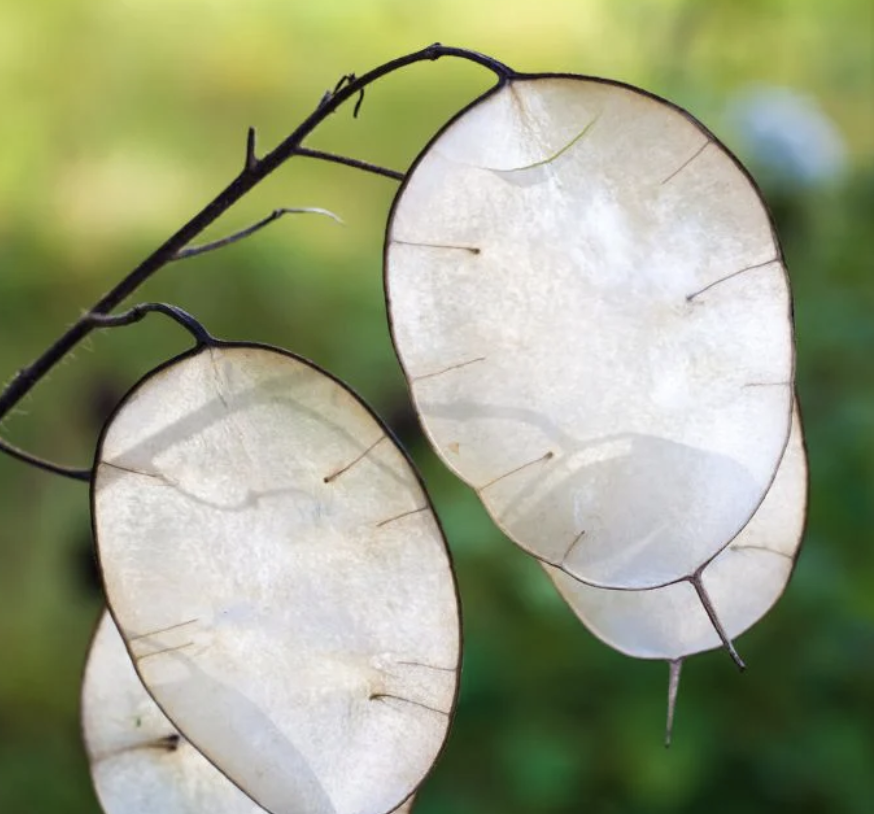
Thin, silvered discs catching the light,
each one holding its seeds in plain sight.
I reached for one and pressed it gently between my fingers.
The outer layers slipped away easily.
What remained was a delicate membrane, almost translucent.
I stood there longer than I expected, separating them one by one,
loosening the seeds, feeling a quiet kind of joy in the process.
In the sounds it makes as you break through. Revelations.
Names & Lineage
Common Name: Annual Honesty, Silver Dollar Plant
Latin Name: Lunaria annua
Family: Brassicaceae
Lunaria hints at the moon, to phases and reflection.
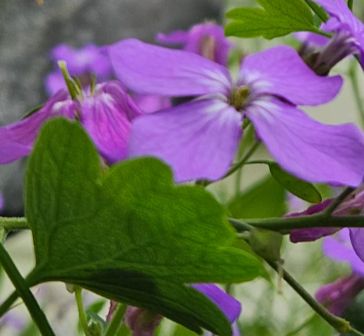
Four-petaled purple flowers and heart-shaped leaves mark honesty in its early stage, before the seed discs form.
Identification
Upright biennial, often 2 to 3 feet tall
Heart-shaped, slightly toothed leaves
Purple or occasionally white four-petaled flowers
Seed pods begin green, then dry into flat, coin-shaped discs
Outer layers fall away, leaving a thin inner membrane
It becomes easiest to recognize after it has finished flowering.
Habitat & Relationship
It tends to appear at edges.
Gardens, paths, places where the soil has been turned.
Here, it moves through a simple cycle.
It comes up, sets seed, and clears space again.
It does not linger in a way that crowds out what is around it.
Ethical Harvesting
Harvest once the pods are fully dry.
The outer layers will loosen.
The inner membrane will catch the light.
The seeds will move freely.
Take what you need.
Leave enough for the plant to return.
Uses
Honesty is not commonly used medicinally,
but it belongs to the mustard family.
Seeds
The seeds can be ground in small amounts.
There is a mild sharpness to them, similar to other brassicas.
They can be used to make a simple mustard.
Roots
The roots can be roasted.
This is not a widely practiced use and is better approached as an experiment.
Material
The dried pods are often kept.
They hold their shape and light well.
Ancestral Context: A Note on the Veil
Standing there, separating the layers,
I kept returning to the thinness of it.
A membrane that holds and reveals at the same time.
In Irish tradition, the veil is often described as something that can thin.
Not something removed,
but something that shifts.
This plant seems to do something similar.
The seeds are not hidden.
They are held just behind a surface that can be seen through.
Preparation: Seed Work
Press the pod gently.
Let the outer layers fall away.
Hold the membrane in your hand.
Remove the seeds.
Save them or return them to the ground.
Safety
Not commonly used as a food plant.
Seeds can be used in small amounts.
Approach unfamiliar plants with care.
Reflection
What becomes visible only after something has revealed itself to you?
